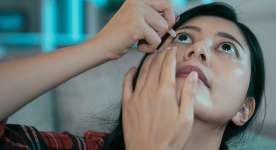
Don’t Let Dry Eye Drama Ruin Your Run
How Runners Deal with Dry Eye Symptoms
Running feels amazing, doesn’t it? The fresh air, the rhythm of your steps, and the freedom that comes with every stride. It keeps your body fit, your mind clear, and your heart happy. But sometimes, right in the middle of that perfect run, your eyes begin to sting or feel dry—and suddenly, that runner’s high starts to fade.
If this sounds familiar, you are not alone. Many runners deal with dry, itchy, or blurry eyes without realizing that their outdoor routine might be the reason. Wind, sunlight, air pollution, and even dry weather can steal away your eye’s natural moisture. Even with sunglasses on, your eyes can still feel irritated if they are not well protected.

So how can you keep your eyes happy while staying active? Let’s start with simple steps.
Gear Up and Protect Your Eyes
Runner’s Eye Care Routine
A few small habits can make a big difference:
- Use preservative-free eye drops before and after your run to stay hydrated
- Avoid running in areas with heavy pollution or strong wind
- Drink enough water throughout the day to keep your body and eyes refreshed
- Clean your contact lenses properly and take breaks from wearing them when possible
If eye symptoms persist despite these measures, remember to consult your eye doctor for a comprehensive evaluation and appropriate treatment.

Running keeps your body healthy, but your eyes deserve the same care. Pay attention to how they feel and
don’t ignore dryness or irritation.
👉Take a quick DEQ-5 Dry Eye Questionnaire to check your symptoms and learn more about your eye
condition. Keep your vision clear, your eyes comfortable, and your runs stronger every day.
REFERENCE
- Navarro-Lopez, S., Moya-Ramón, M., Gallar, J., Carracedo, G., & Aracil-Marco, A. (2023). Effects of physical activity/exercise on tear film characteristics and dry eye associated symptoms: A literature review. Contact Lens and Anterior Eye. https://doi.org/10.1016/j.clae.2023.101854
- Ing, E. (2010). Running and the Eye. University of Alberta. Published in September 2010.
- Sahai, A., & Malik, P. (2005). Dry Eye: Prevalence and Attributable Risk Factors in a Hospital-Based Population. Indian Journal of Ophthalmology, 53(2), 87–91. https://doi.org/10.4103/0301-4738.16170
- Golden, M. I., Meyer, J. J., Zeppieri, M., et al. (2024). Dry Eye Syndrome. In: StatPearls [Internet]. Treasure Island (FL): StatPearls Publishing; 2025. https://www.ncbi.nlm.nih.gov/books/NBK470411/
- Backes, C., Religi, A., Moccozet, L., et al. (2019). Sun exposure to the eyes: Predicted UV protection effectiveness of various sunglasses. Journal of Exposure Science & Environmental Epidemiology, 29, 753–764. https://doi.org/10.1038/s41370-018-0087-0
- Walsh, N. P., Fortes, M. B., Raymond-Barker, P., et al. (2012). Is whole-body hydration an important consideration in dry eye? Investigative Ophthalmology & Visual Science, 53(10), 6622–6627. https://doi.org/10.1167/iovs.12-10175
관련 게시물

這項快速的測試並非醫療評估,且並不能取代眼科醫師的看診,他們能做出與治療、診斷或開立藥物相關的決定。